canlı casino siteleri online casino rottbet giriş rott bet güncel giriş
Crankshaft deflection refers to the slight bending or warping of a crankshaft that occurs over time due to continuous engine operation. Although it happens gradually and isn’t visible to the naked eye, even small deflections can lead to significant damage if left unmonitored.
As the engine runs, the crankshaft is exposed to dynamic loads, vibrations, and mechanical stress. Over time, this can cause the shaft to deviate from its original straight alignment. This process happens quietly in the background, but can have major consequences for overall engine health, leading to expensive equipment failure.
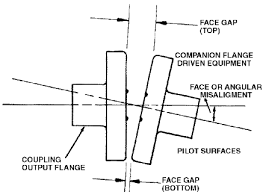
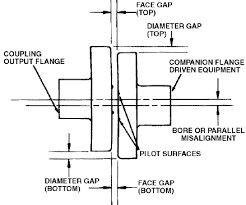
Image reference: http://s7d2.scene7.com/is/content/Caterpillar/CM20160713-53120-62927
Why is Measuring Crankshaft Deflection Important?
The crankshaft is composed of crank-webs, crank pins, and journals. It is supported along its length by main bearings at the journals. Ideally, these bearings should wear evenly, but in reality, wear is rarely uniform.
As the bearings degrade at different rates, the crankshaft can begin to bend (either slightly upward or downward) enough to introduce misalignment and induce stress in the crank-webs. While this misalignment may not be visibly obvious, it can accelerate fatigue, lead to uneven wear, and reduce the overall lifespan of the engine.
Regular deflection measurements are essential to ensure the crankshaft remains within acceptable alignment limits. Early detection allows for minor adjustments before severe damage occurs, helping to avoid premature wear and costly downtime.
How is Crankshaft Deflection Measured?
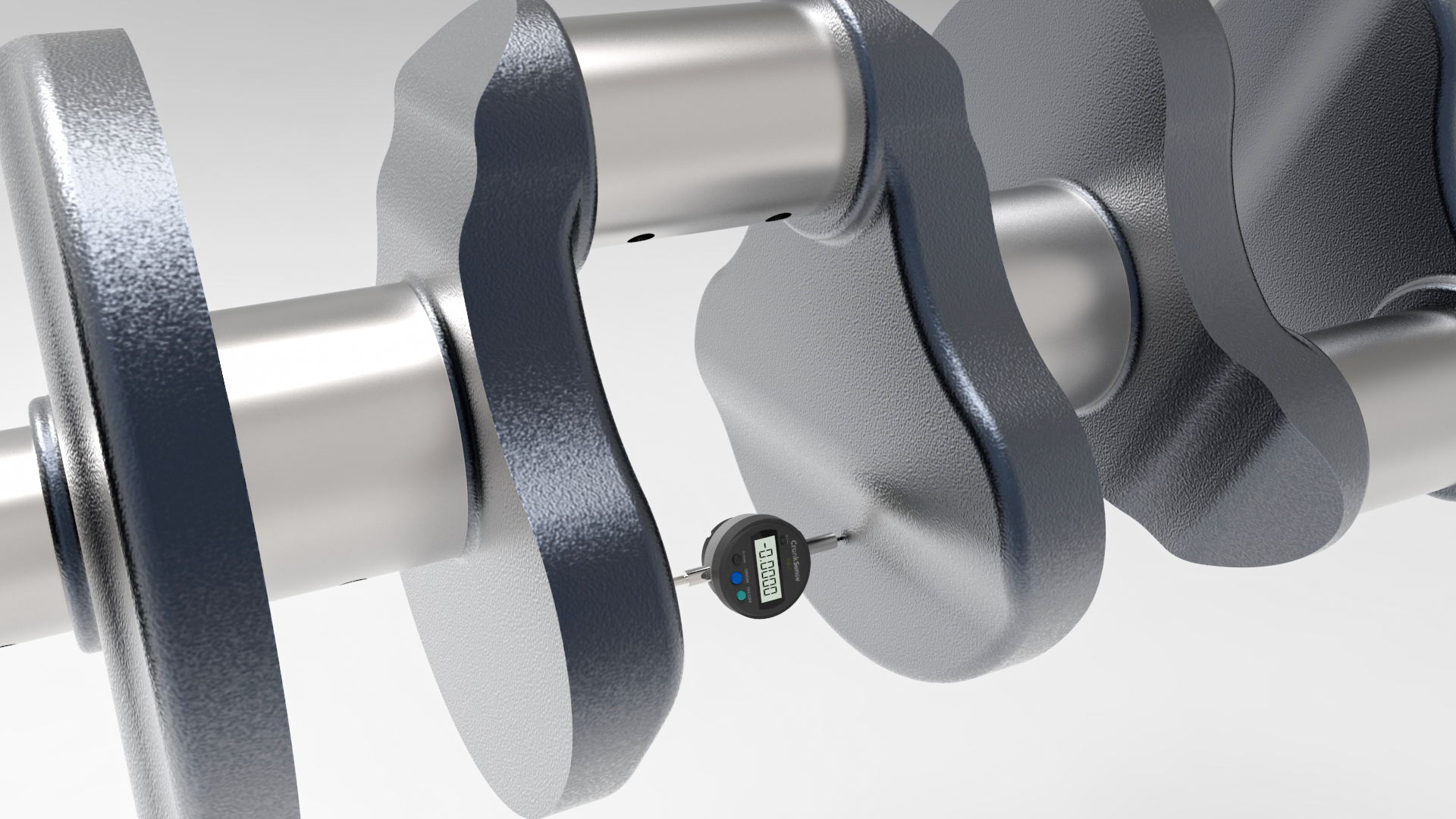
Traditionally, crankshaft deflection is measured using a mechanical dial gauge placed between the crank-webs. This manual setup helps determine the distance between the webs and indicates how much the crankshaft has bent over time. While this method is common, it presents several challenges in practice.
To ensure accuracy, each measurement must be taken from the exact same location every time. Technicians typically mark reference points with a center punch, then manually record readings at four positions: top, bottom, and both sides of the crank.
This process is time-consuming, prone to human error, and highly dependent on the individual technician. Variations in gauge placement, reading interpretation, and data logging can compromise accuracy. External factors such as engine load, trim, hog, and sag also affect results, making repeatable, reliable measurement even more difficult.
Introducing CrankSense: A Smarter Solution for Crankshaft Deflection Testing
To eliminate the challenges of traditional testing methods, Motionics developed the CrankSense Wireless Crankshaft Deflection Test Kit.
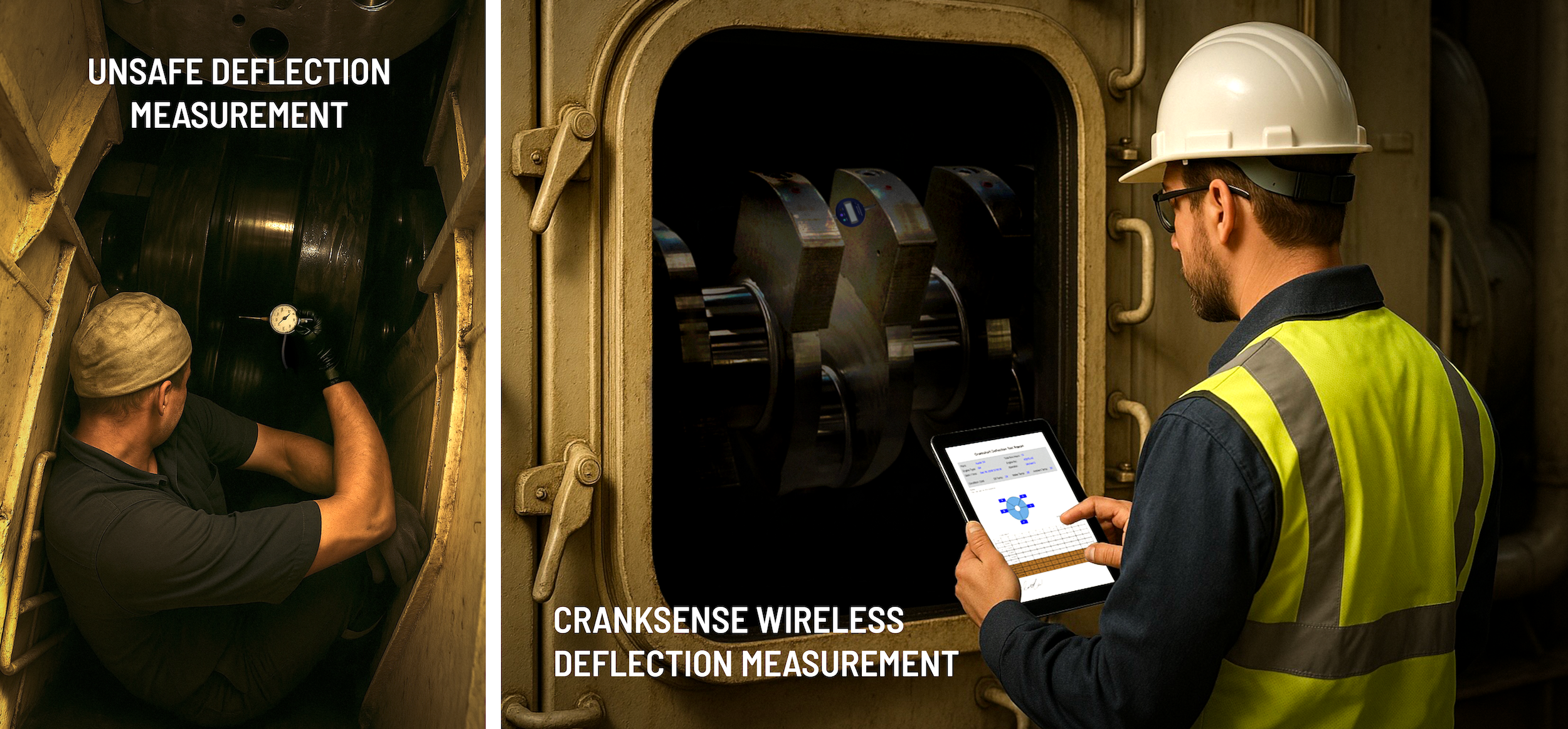
CrankSense replaces manual gauges with a Bluetooth digital dial indicator, delivering precise measurements directly to a mobile device completely wirelessly.
Paired with the CrankSense software for Windows, or iPad app, the system enables real-time data display, automatic logging, and instant report generation – all without the need for manual note-taking or calculations.
CrankSense makes crankshaft deflection testing faster, more accurate, and since operators can work at a safe distance from potentially hazardous rotating machinery, CrankSense is the ultimate safety solution.
Whether you’re in the field or in the shop, CrankSense simplifies deflection testing and ensures your engines stay within alignment to reduce downtime and save you money.